Spot repair of failed joints
This suits most houses, where the damage sits in a few areas like under a gutter or along the bottom rows of brick. You pay for the joints that need it, and the sound mortar around them keeps working.
Crumbling or cracked mortar between your bricks? We redo the joints that have failed, with mortar matched to the old, so the wall stays tight.
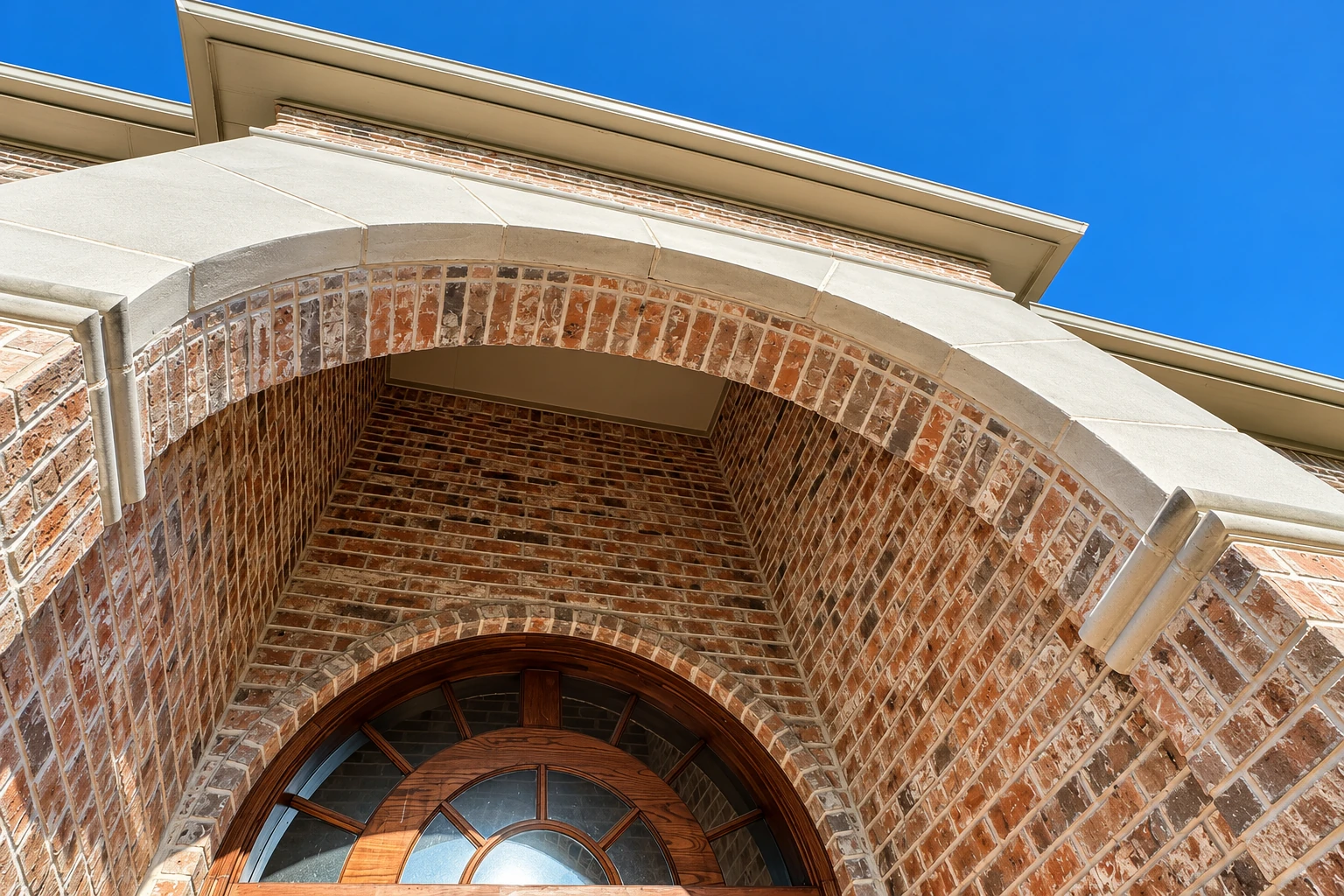
Tuckpointing, which guides also call repointing, means cutting worn mortar out of the joints in a brick wall and packing in new mortar. In Beaumont we usually do it only on the joints that have failed, so the wall sheds water again without tearing out mortar that's still good.
Most people call me after they spot sand on a windowsill, mortar they can scrape out with a key, or a crack that wasn't there last year. The price moves with how many joints have failed, how high we have to work and how hard your old mortar is to match. The schedule turns on how much wall needs it and whether your house needs historic approval first. I'll look at it in person and send you a written estimate, so you're not guessing.
I come out to every estimate and look at the joints in person, not from a photo. Our masons do the work, and I'm on site to check it, so the person who told you what the job needs is the one who signs off on it.
I learned the trade laying brick and block on new houses around Beaumont, then started this business in 2013 to work on homes people already live in. Thirteen years later, repairs that blend in with the brick and mortar already there are what we're known for.
We're fully licensed and insured. On your job you'll also see drop cloths over the plants and walks, dust kept to the work area and a cleanup at the end of each day, because we treat your house like it's ours.
If a few joints under one downspout have failed, I'll tell you that instead of selling you the whole wall. Satisfaction guaranteed on every job. Call (409) 240-0376 or use our contact form to set up a visit.
We reply to calls and messages within one business day, and the estimate is free, on site and obligation-free. I'll come look at your joints in person, then send you a written estimate after the visit. Photos of the crumbling or cracked spots, and whether your home sits in the Oaks Historic District, help me plan that visit.
If your home is in the Oaks Historic District, the area from Beech Street south to Rusk and from 1st Street west to 11th Street, or has a historic designation anywhere in Beaumont, the city requires a Certificate of Appropriateness for most exterior alterations and repairs. Its list names bricks but not tuckpointing, so whether joint work alone needs one isn't settled, and we check with the city's planning staff before we start. Staff can approve some requests, but a bigger change may go to the Historic Landmark Commission, which meets monthly, so build that wait into your plans. I'll tell you at the estimate if approval looks likely and help you get it in place. The Texas Historical Commission also gives owners of historic houses technical guidance, designated or not, if you want help keeping the work from costing the house its original character.
We're based in Beaumont and work in the cities around it, including Nederland, Orange and plenty beyond the ones on this site. On a lot of brick homes around here the mortar has worn back along the bottom rows, under gutters and around chimneys while the brick itself is still in good shape, and that's exactly the house tuckpointing is for.
Your brick needs tuckpointing where you see crumbling mortar, gaps in the joints, hairline cracks, cracks between the brick and the mortar, or mortar worn back more than 1/4 inch from the face. Only those joints need work, and a wall with a handful of bad spots usually just gets those fixed. If you're not sure, send photos or call and I'll come take a look.
Mortar joints typically last more than 25 years, while the bricks themselves can go well past 100. So over the life of a brick house, plan on some joint repair now and then, depending on how exposed the wall is and what mortar was used.
The new mortar should be about as strong as the original or weaker, never stronger. A harder mix puts the load on the thin new joint and the bricks around it, and it can flake off the brick face, damage you can't undo. That's why it's fair to ask any mason how they match your old mortar.
It comes down mostly to how many joints have failed, and you'll get a written figure from me after I see the wall. Height and access, how many bricks need replacing along with the mortar, and how hard your old mortar is to match in color all move it up or down.
Pick someone who has done repointing before, because a great bricklayer isn't always good at it. Preservation guides suggest looking at a mason's past repointing jobs or having them work a hidden section of wall first. Ask us the same questions you'd ask anyone else.
Water from a leaking downspout can leach the mortar right out of the joints. Preservation guidance says the downspout has to be replaced and any other drainage problem fixed, or the new mortar goes the same way. I'll point out leaks like that at the estimate, since fixing the cause is the whole point.
That's efflorescence, a whitish bloom that sometimes shows up in the first few months after repointing and usually weathers away on its own. If it hangs on, the safest fix is dry brushing with a stiff natural or nylon brush, then wet brushing. Skip the muriatic acid, which generally doesn't work and shouldn't be used.
It starts with me walking every wall and showing you which joints have failed and which are fine. If your house needs historic approval, we get that sorted before our masons start, and then they work through the marked joints and clean up as they go.